10 Dangerous Planet in the Universe

- SciTechDaily




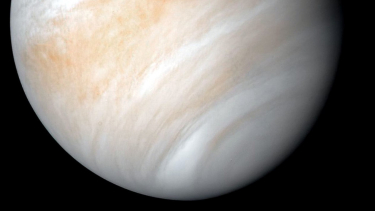
Venus isn’t only extremely hot because of its closeness to the Sun. It is also full of active volcanoes. Because it has a thick atmosphere, the heat and carbon dioxide get trapped within the planet, creating a cycle that raises the temperatures.

Researchers think that Venus would be similar to Mercury if Venus did not have these clouds. The high temperatures on the planet also mean that the rain never hits the ground. Instead, it evaporated halfway to form another cloud.
3. OGLE-TR-56b

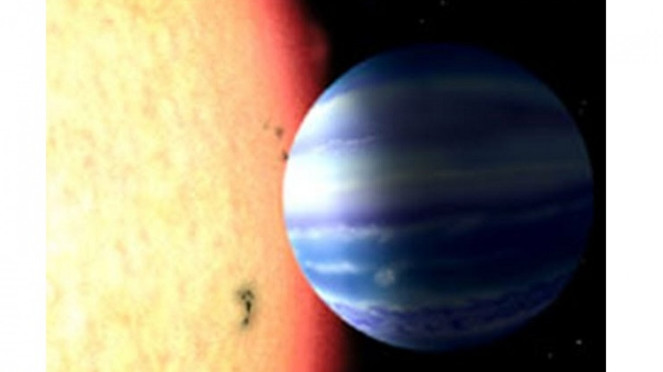
Ogle TR 56b
Planet OGLE-TR-56b lies in the Sagittarius constellation 5,000 light-years away from Earth. Hot Jupiters are often formed farther out in their stellar systems and later move closer to their stars.

Planet OGLE-TR-56b has already moved too close to its own star. It’s so near that a year is 29 hours long, and the exoplanet’s surface temperature reaches 2,000 kelvins.Over there, the clouds are not made of water but of vaporized iron. Rain falls to the ground as hot liquid iron.
4. TrES-2b
TrES-2b is the darkest planet out there. It is so black that the coals will appear lighter if they are placed side by side. The planet's atmosphere absorbs more than 99 percent of the light it receives from the sun.
Astronomers believe that the exoplanet reflects so little light because its atmosphere is filled with vaporized sodium and potassium or gaseous titanium oxide.
Nevertheless, being black does not mean that the exoplanet is cool. In fact, its atmospheric temperatures reach over 980 degrees Celsius (1,800 °F).
This extremely high temperature causes some parts of the exoplanet to emit a red glow, just like burning coal or electric stove coils. Astronomers also suspect that the exoplanet is so close to its star that both are tidally locked.
5. OGLE-2005-BLG-390Lb
OGLE-2005-BLG-390Lb is a rocky exoplanet with a very thin atmosphere located right in the middle of our own Milky Way. All three factors made astronomers suspect that it could contain life when it was discovered. However, they now believe that it does not due to the exoplanet’s super-low temperature