The Most Famous Traditional Sundanese Musical Instruments

- mariposamuseum.org




4. Kecapi


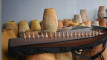
Kecapi
- Tangkapan layar instagram/yosep.pengrajinkendang
Traditional Sundanese songs are usually accompanied by various musical instruments, one is Kecapi. How to play Kecapi is by plucking. The instrument is divided into two types of sections.

First, the harp or master harp, which is larger and has 18-20 strings, and is used as a musical instrument to guide music. For example, provide an introduction to determine speed.
There is also a detailed harp or harp for children. This harp is played as a musical accompaniment by filling the gaps between notes with high frequencies.
5. Kendang

Sandiaga Uno dan perajin kendang Gunung Kidul
- Istimewa
Kendang is one of the traditional Sundanese musical instruments. As a Sundanese musical instrument, drums are very commonly used as an entertainer in various performances and events. Usually, in a typical Sundanese kendang performance there is three kendangs.
The first is the gendang, and there are two more children's drums consisting of ketipung and kutiplak. Each type of kendang is also distinguished according to its function, such as the jaipongan kendang, keurseus, kiliningan kendang, tepak tilu kendang, and others. So far, kendang is very useful for adjusting the tempo beginning, and end of a typical West Javanese song.
6. Rebab

Rebab
- Tangkapan layar instagram/oscarartunes
This West Javanese musical instrument is called Lengek, and players who play the fiddle are called ngalengek. From its history, this instrument is one of the important musical instruments that fill the basic melody of the tones. The fiddle is also relatively small, with a rounded body and a fairly long neck.
In the past, the fiddle was made of copper and had 3 strings. Nowadays, the violin is usually made of wood and is shaped like a bow. Sundanese fiddle, upright, with a bow. The bow used for Raba is more curved than the bow used for the rebab. Like the violin, the way to play the rebab is to slide the bow over the rebab.