Six Active Faults in West Java Could Trigger Large Earthquakes

- ANTARA FOTO/Raisan Al Farisi


Historically, the eastern part of the Baribis fault was recorded to have triggered earthquakes that damaged Jakarta in 1780 and Majalengka in 1990. In a study conducted by a Professor of the Faculty of Mining and Petroleum Engineering at the Bandung Institute of Technology (ITB), Sri Widiyantoro said, this fault poses a great threat, especially to the Jakarta area.

4. Garsela Fault

VIVA Militer: Peta Sesar Garsela.

The Garsela or South Garut Fault is an active fault that extends from the south of Garut to the south of Bandung for 42 kilometers. This fault is divided into two segments, the Rakutai segment, and the Kencana segment, both of which are equally active.
Earthquake activity that occurs in the Garsela fault zone predominantly has a shear fault source mechanism. One of the damaging earthquakes centered on the Garsela fault occurred on July 18, 2017, with a magnitude of M 3.7 which caused damage around the Kamojang area, Garut.

5. Citarik Fault
The Citarik Fault is an active fault that has an elongated but segmented structure through Pelabuhan Ratu, between Mount Salak - Pangrango, Bogor, Jonggol, and Bekasi areas. The fault is characterized by the alignment of the Citarik River and cuts through Java Island in the west.
The fault has a north-northeast - south-southwest orientation. As an active fault, the Citarik fault activity also has the potential to cause earthquakes.
6. Cipamingkis Fault
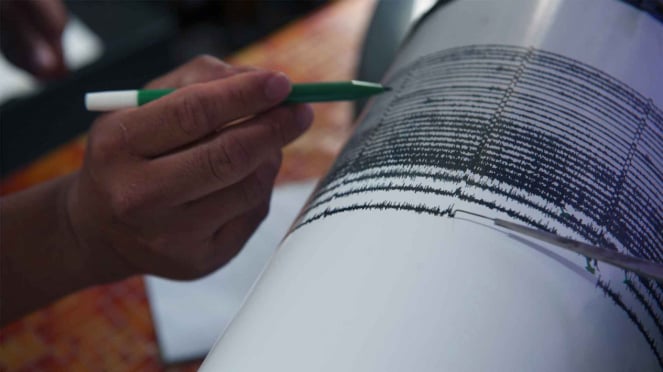
Ilustrasi mesin seismograf membaca gempa.
- ANTARA Foto/Nyoman Budhiana
The Cipamingkis fault is an active fault located in eastern Sukabumi and western Cianjur. According to the BMKG website in 2022, this fault is an active fault with a southwest-northeast direction. In 2018, the Cipamingkis fault triggered dozens of earthquakes with relatively very small magnitudes.

Jalan Kolonel Masturi di Lembang Ditutup Total 14 September hingga Pertengahan November, Berikut Jalur Alternatifnya
Polisi menyiapkan rekayasa lalu lintas untuk mengantisipasi dampak penutupan total Jalan Kolonel Masturi (Kolmas) di Lembang, Bandung Barat, mulai 14 September 2026