Humans Could Understand Animals Feeling through Vocalization

- www.pixabay.com/capri23auto


VIVA – Researchers revealed that humans could understand animals feeling including pigs, horses, and goats based on their vocalizations. They say these findings indicate certain information in the vocalization such as how strong an animal's emotions are to be conveyed across species.

As quoted from The Guardian, this study conducted by the University of Copenhagen, Denmark states that knowledge of animal feelings is based on human voices as well.
"People may base their decisions on how humans sound when they are more or less aroused due to arousal, which is related to the stress pathway, where it is a well-maintained system across vertebrates," explained dr. Elodie Briefer, one of the authors of the study.

Vertebrates are all types of animals that have a spine. Briefer and colleagues report how they recorded vocalizations from six species of animals (horses, pigs, goats, cows, wild horses, and wild boars).
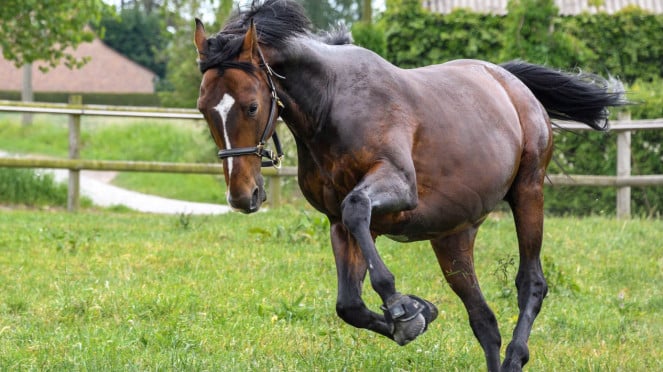
Ilustrasi kuda berlari.
- www.pixabay.com/christels

The team recorded whether the sound was made when the animal was aroused, as determined by heart rate or movement, or the whether the sound was made in a positive context such as anticipating food, or a negative one such as isolation.
For humans, the researchers used recordings of meaningless speech sequences said when angry or scared to represent the higher or lower emotional intensity and arousal.
The results will later reveal that the voice refers to a negative context or vice versa. Human voice samples were obtained from 1,024 participants from 48 countries by listening to each partner's voice online.
As for animals, participants were presented with four pairs of vocalizations. Each pair was asked to rate the emotional intensity of the voice as high or low, while the other two pairs rated whether the emotion was positive or negative.
Results showed that overall participants correctly judged 54.1 percent of subjects' emotional intensity and 55.3 percent of voice intensity. Humans turn out tend to recognize domestic species better than wild ones.