History of the World Cup Trophy, Once Stolen by Robbers

- Marca



VIVA – The FIFA World Cup is one event that captures the attention of the entire world, especially the iconic trophy and prize for the World Cup winner. The trophy itself is theoretically just a symbol, a physical representation of success, and something for the winners to hold up and go on about after their victory.

The current World Cup trophy made its inaugural appearance in 1974 after Brazil had won the first cup for the third time in 1970. As decreed by Jules Rimet himself, the first team to win the trophy that bore his name thrice would be allowed to keep it forever.
Gold-plated silver and lapis lazuli trophies were used to create the Jules Rimet trophy. The design included an image of the goddess Nike, the Greek goddess of Victory. French artist Abel Lafleur was responsible for its creation. The trophy is 14 inches (35 cm) tall and weighs 8.4 pounds (3.9 kg) (3.80 kg).

But that trophy was stolen from Brazil in 1983 and its fate is uncertain or maybe it went missing sometime in the 1960s. Perhaps it was stolen in the 1950s and the one that we all thought was the real thing was actually a replica, as quoted from the athletic site.
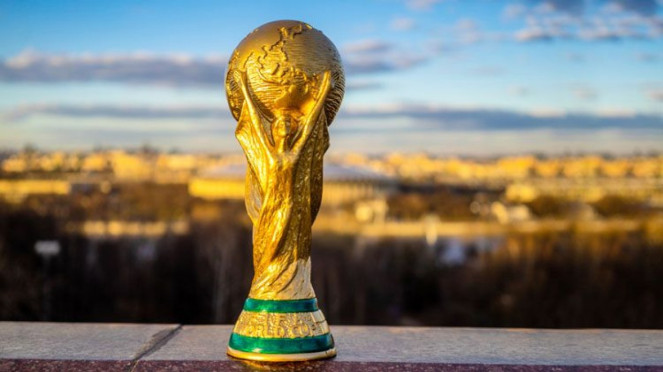
Trofi Piala Dunia
- Verdict
Whatever its end, its beginnings came in 1928. When Jules Rimet thought that a quadrennial global football tournament was a good idea, he needed something to award the victors.
He employed a Parisian sculptor named Abel Lafleur, who came up with a design loosely based on the ancient Greek sculpture the ‘Winged Victory of Samothrace’ (which is still available to view in the Louvre), with Nike the goddess of victory holding an octagonal cup with wings.
To briefly defend the old boy against accusations of extreme egotism, the trophy was initially simply known as ‘Victory’ and was only named after Jules Rimet following his passing in 1956.