NASA Study an Asteroid that Could Be Make World Richer

- SWNS
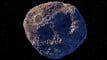
VIVA – A spaceship is being sent to study an asteroid that could be worth 75,000 times more than the entire global economy. The rock, named 16 Psyche, is 140 miles wide, 230 million miles away and potentially has a core of iron, nickel, and gold worth an astronomical $10,000 quadrillion.

The World Bank valued the world economy at $133 trillion in 2019, meaning it is 75,188 times less valuable than 16 Psyche.
Nasa’s mission, led by Arizona State University, will take four years to reach the unique metal-rich asteroid that is orbiting Mars and Jupiter. After a year’s delay to complete vital tests, Nasa announced it is targeting an October launch on tycoon Elon Musk’s SpaceX Falcon Heavy rocket.

It will carry a probe that is 81ft long and 24ft wide, making it roughly the size of a tennis court with its solar panels extended. The body of the spacecraft, which contains the instruments is about as big as a golf cart.
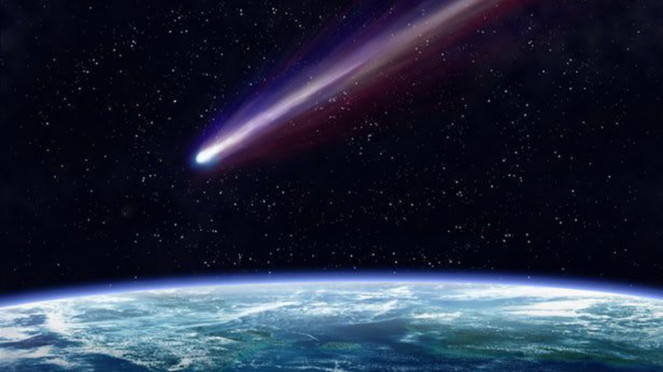
Benda luar angkasa / satelit / asteroid / komet.
- Dailyhunt

The mission has echoes of Adam McKay’s hit film Don’t Look Up, starring Leonardo DiCaprio, Jennifer Lawrence, Meryl Streep, and Jonah Hill.
In the 2021 Netflix blockbuster, a billionaire discovers that a comet heading toward Earth contains trillions of dollars worth of rare-earth elements and sends a mission to recover them.
But unlike the film, which ends in disaster, 16 Psyche is not a threat to Earth. NASA says that what makes it unique is that it appears to be the exposed nickel-iron core of an early planet, one of the building blocks of our solar system. It could be that it suffered demolition and the core is what is left.
"Deep within rocky, terrestrial planets – including Earth – scientists infer the presence of metallic cores, but these lie unreachably far below the planets’ rocky mantles and crusts. Because we cannot see or measure Earth's core directly, Psyche offers a unique window into the violent history of collision and accretion that created the terrestrial planets," the space agency said.