Export Could Save Indonesia's Economic Growth during Uncertainties

- VIVA/M Ali Wafa


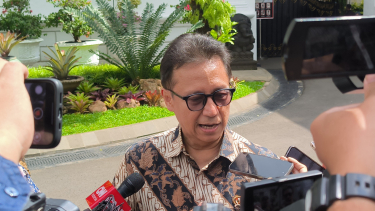
According to Prasetyantoko, the export sector contributed to Indonesia's economic growth remaining positive last year. Based on data from Indonesia Statistics (BPS), Indonesia's economy grew by 5.31 percent in 2022. He expected that the Indonesian economy can also grow above five percent in 2023.

Although Indonesia's export sector is elevated due to the rising global food and commodity prices, he said making it truly an economic buffer is a necessity for the future.
"We still benefit in 2022 because of the commodity prices aspect, where most of our exports are commodity-based. In the future, we need to make our exports more sophisticated, which means the manufacturing sector," he remarked.

Shifting export products from commodity-based to manufactured products is also homework that must be completed. He also appreciated the government's downstream industry policy. The policy of industrial down streaming is expected to strengthen the competitiveness of the national economy in facing the challenges of uncertainty in the current global economic conditions.
Indonesia is also determined to become a global key player in commodity-based downstream industries by reducing raw material exports and increasing the down streaming of domestic natural resource-based industries.

One commodity with large reserves in Indonesia is nickel, where U.S. Geological Survey data shows that Indonesia's nickel reserves rank first, reaching 21 million tons or equivalent to 22 percent of global reserves. Indonesia's nickel production also ranks first at 1 million tons, exceeding the Philippines (370 thousand tons) and Russia (250 thousand tons).
Nickel down streaming has also proven to contribute positively and throughout 2022 has contributed 2.17 percent to total non-oil and gas exports.
"If Indonesia wants to take off from a middle-income country to a developed country and the milestone is 2045, 100 years of Indonesia, I think it must be designed properly, one is that our export products are increasingly diversified, increasingly diverse. That means we have to build a strong manufacturing industry base and again it can't just happen," Prasetyantoko stated.