James Webb Space Telescope Spots Oldest Black Hole in Universe

- Russia Today
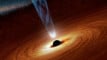

The most extreme AGN are quasars, supermassive black holes that are billions of times heavier than the sun and shed their gaseous cocoons with light blasts trillions of times more luminous than the brightest stars.

Because light travels at a fixed speed through the vacuum of space, the deeper that scientists look into the universe, the more remote light they intercept and the further back in time they see. To spot the black hole, the astronomers scanned the sky with two infrared cameras and used the cameras' built-in spectrographs to break down the light into its component frequencies.
By deconstructing these faint glimmers sent from the universe's earliest years, they found an unexpected spike among the frequencies contained within the light is a key sign that the hot material around a black hole was beaming out faint traces of radiation across the universe.

How black holes form so suddenly in young cosmos remains a mystery. Astronomers are still hunting for younger, 'primordial' black holes that appeared after the Big Bang. But so far, black holes remain elusive.


Pemerintah Serap Utang Rp 34 Triliun Pekan Ini
Pemerintah menyerap dana senilai Rp34 triliun dari lelang sembilan seri Surat Utang Negara (SUN) pada 1 September 2026. Nilai tersebut lebih rendah dari total penawaran.