

- Antara/ Arief Priyono

VIVA – Death is the balance of life. Its presence has always followed humanity's journey, whether through natural disasters or non-natural disasters such as war or outbreak. One of the last and still ongoing big disasters is the Covid-19 pandemic, but it is not the first.
Throughout history, there have been many major natural disasters that changed the habits of human history because these disasters have killed many people. Well, here are five major natural disasters that changed the world.
1. The Black Death (1347-1351)

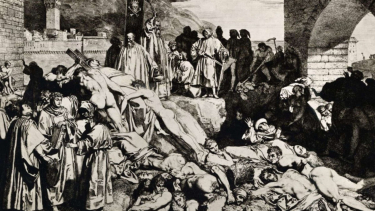
The Black Death
- history.com
The Black Death, caused by the bacterium Yersinia pestis, was one of the deadliest pandemics in human history. It originated in Asia and spread to Europe through trade routes.
The bubonic plague caused widespread death, estimated to have killed between 75 to 200 million people, and had far-reaching social, economic, and political consequences. It significantly impacted feudalism, labor systems, and religious institutions, leading to social upheaval and long-term changes in European society.
2. The 2004 Indian Ocean Earthquake and Tsunami

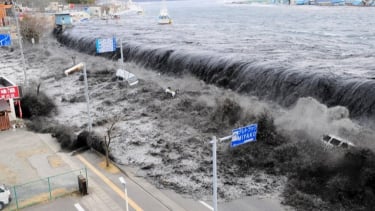
Tsunami samudera hindia 2004.
- Pixabay
One of the most devastating natural disasters in recent history, the 2004 Indian Ocean earthquake and tsunami resulted from a massive undersea earthquake off the coast of Sumatra, Indonesia. The earthquake had a magnitude of 9.1-9.3, triggering a series of tsunamis that affected multiple countries in the region.
The tsunami claimed the lives of an estimated 230,000 to 280,000 people and caused extensive damage to coastal communities. It led to significant humanitarian efforts, improved disaster preparedness, and greater international cooperation in the field of disaster management.
3. The storms that sank the Spanish Armada (1588)
When the Spanish attempted to invade England in 1588, after first being defeated by the English, their fleet of ships then ran into a succession of storms off the coasts of Scotland and Ireland.
The Spanish lost around half of their ships and nearly 5,000 men as a result – many of whom were killed when they were forced ashore in Ireland.
And although the ships were already fleeing the English when the bad weather hit, the storms are renowned for ensuring the invasion failed and the ships did not come back.
4. The Toba Supereruption (Around 75,000 years ago)
The Toba supereruption, believed to be the most massive volcanic eruption in the past 2 million years, had a profound influence on global climate and human history.
The eruption, which occurred in present-day Indonesia, caused a severe volcanic winter, leading to widespread environmental devastation and potentially impacting the human population at the time. Some researchers propose that the eruption led to a population bottleneck, resulting in genetic and cultural changes in early human communities.
5. Vietnam War (1955-1975)

Ilustrasi bendera Vietnam.
- Antara Foto.
Before 1944, the world economy was based on the price of gold. After World War II, the United States had the highest amount of gold reserves in the world. That is until the Viet Cong Army humiliated America.
In 1971, Richard Nixon imposed price or price controls and ended the world's dependence on the American dollar. Essentially, Nixon ended the then gold standard.
Two million Vietnamese lives were lost during the war, along with 58,000 casualties on the American side. The war is largely seen as the first defeat and strain in American military history. On the other hand, the war also changed the world's economic system.
Disasters are always seen as a bad thing. But if seen from the other side, it turns out that disasters such as disease outbreaks and wars can also have a positive impact on humanity.