James Webb Space Telescope Shows Fantastic Power on Alien Planet

- U-Report

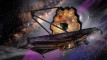
They watched the world pass behind its star four times, allowing researchers to compare the total brightness when the planet was beside the star (Trappist-1 c plus light from its star) versus just starlight. This let astronomers determine how much of a certain type of light, which is absorbed by CO2, was present on this extraterrestrial world. Ultimately, they found little evidence of CO2.

"Our results are consistent with the planet being a bare rock with no atmosphere, or the planet having a really thin CO2 atmosphere (thinner than on Earth or even Mars) with no clouds," Sebastian Zieba, a graduate student at the Max Planck Institute who led the research, said in a statement.
Finding the likely nature of Trappist-1 c, and the forthcoming Trappist planets Webb will investigate, requires extreme telescope sensitivity.

"The sensitivity required to distinguish between various atmospheric scenarios on such a small planet so far away is truly remarkable," NASA explained.
"The decrease in brightness that Webb detected during the secondary eclipse was just 0.04 percent: equivalent to looking at a display of 10,000 tiny light bulbs and noticing that just four have gone out," it added.

The reality that so far two Trappist planets have profoundly thin atmospheres and no signs of water could mean the other sibling Trappist planets, though farther away from their star and existing in more temperate environments still might have little water or ingredients for a habitable world.

Pelarian Bos Tempat Hiburan Malam Planet Batam Berakhir! Baru Mendarat dari Singapura Langsung Diciduk Bareskrim
Pelarian Yuwanky, pemilik tempat hiburan malam (THM) Planet Batam yang masuk daftar pencarian orang (DPO) terkait dugaan peredaran narkoba, akhirnya berakhir.