Tensions in Southeast Asia Rise Amidst China’s Assertiveness

- FSI


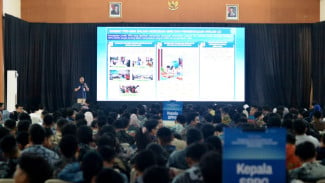
Jakarta, VIVA – Southeast Asia is facing mounting geopolitical tension, with the South China Sea (SCS) emerging as a key arena for major power rivalry. Academics and regional experts warn that the area is now at a critical juncture, unlike in the past.

Johanes Herlijanto, Chairman of the Indonesian Sinology Forum, attributes the rising tension to China’s increasingly assertive posture over the past 15 years.
“During the eras of Deng Xiaoping and Hu Jintao, China maintained a low profile despite its growing strength,” Johanes explained during a seminar titled “China and Regional Maritime Security: Southeast Asian Perspectives” in Jakarta on May 19, 2025. “Today, however, China has shifted tactics and is actively engaging in what experts term ‘grey-zone’ operations.”

These grey-zone tactics include mobilizing civilian maritime elements backed by China’s Coast Guard and Navy to operate within the Exclusive Economic Zones (EEZs) of Southeast Asian countries.
Nations such as Indonesia, the Philippines, Vietnam, and Malaysia have all experienced encroachments based on China’s unrecognized “nine-dash line” claims, which Johanes argues violate international maritime law, particularly UNCLOS.

This assertiveness has exposed fault lines within ASEAN, noted Ristian Atriandi Supriyanto of Universitas Indonesia.
“Some ASEAN states adopt soft approaches, either because they feel too weak or because they see China as an essential economic partner,” he said. He warned that viewing China's maritime claims as a small price for economic benefits could undermine regional sovereignty.
Rear Admiral Salim of the Indonesian Navy’s Maritime Studies Center echoed these concerns. He emphasized the urgency for ASEAN unity and diplomacy to ensure stability.
“Promoting mutual understanding based on UNCLOS and pursuing a legally binding Code of Conduct (COC) in the SCS must be top priorities,” Salim said, adding that maritime dialogue and preventive frameworks like the Indo-Pacific Collision-at-Sea Protocol are essential.
Dino R. Kusnadi, Deputy Director at Indonesia’s Ministry of Foreign Affairs, stressed that diplomacy remains key in managing Indonesia-China relations. While China is a leading investor, he clarified, “It doesn’t mean Indonesia is dependent. Cooperation is driven by current needs, not allegiance.”