Seven Cat Diseases Can Spread and Transmit to Humans

- Pixabay/IgorShubin


3. Parasitic Infection

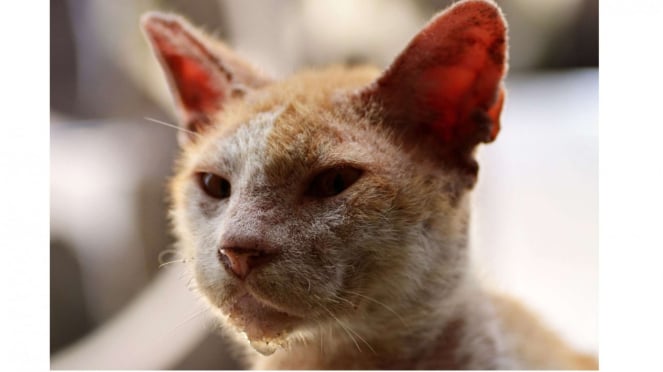
Ilustrasi kucing sakit (kudis)
- Pixabay/mochawalk
Fleas are the most common ectoparasite of cats, and their bites can cause itching and inflammation in both humans and cats. Fleas can also be vectors of CSD and other zoonotic diseases. Flea-infested cats can become infected with flea-causing tapeworms during treatment. Although rare, people can also get tapeworms from accidentally ingesting fleas.

4. Scabies

Anak-anak terserang wabah scabies
- Ngadri/Kalbar

Scabies, or infection by the sarcoptic mite Sarcoptes scabiei, is another zoonotic external parasite of the cat's skin. Although not as common as flea infestations, these mites can be transmitted from infected cats to humans, where they burrow into the skin and cause painful sores.
Treatment in humans usually includes the use of topical creams to reduce itching, diligent grooming of infected pets, and cleaning of clothing, also bedding carefully.
5. Fungal Infection (Ringworm)
Ringworm or dermatophytosis is not caused by worms at all. Instead, it is a skin infection caused by a group of fungi. Infected cats usually come from neighborhoods with a large number of animals. In cats, ringworm usually appears as dry, gray, scaly patches on the skin.
In humans, ringworm usually appears as round, red, itchy sores with a ring of scales around the edges. Lesions can appear on any part of the body, including the scalp, feet (called "Hong Kong feet"), groin, or beard. Shingles are spread through contact with the skin or fur of an infected animal, either directly or from a contaminated environment.
6. Toxoplasmosis
Toxoplasmosis is caused by the protozoan parasite Toxoplasma gondii. People with weakened immune systems and babies whose mothers were infected during pregnancy can become seriously ill from the parasite. However, most people infected with Toxoplasma gondii show no obvious signs of illness.
Cats can become infected with Toxoplasma gondii by eating infected rodents, birds, or anything contaminated with the feces of other infected animals. Infected cats can transmit the parasite through feces for up to two weeks. Once shed in feces, the parasite must mature for one to five days to cause infection.