Orthrus Variant More Dangerous than Other COVID-19 Variants

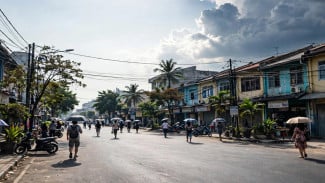
- pexels/Edward Jenner


VIVA – Another COVID-19 sub-variant, CH.1.1, or Orthrus, has been found in several countries around the world, including Indonesia. In fact, the Indonesian Ministry of Health has announced as many as 14 cases of this Orthrus sub-variant.

In the United States, the Orthrus sub-variant is estimated to account for up to 1.5 percent of all COVID-19 cases. The Omicron sub-variant was named after the mythical two-headed cattle dog killed by Hercules, by Australian variant tracker Mike Honey. Allegedly, the name was coined based on its dangerous nature.
Not people know about this relatively new strain, although its percentage has been increasing globally since November 2022. Like other COVID-19 variants, Orthrus also has the potential to be more contagious, evade immunity from vaccines and infections, and cause more severe disease.

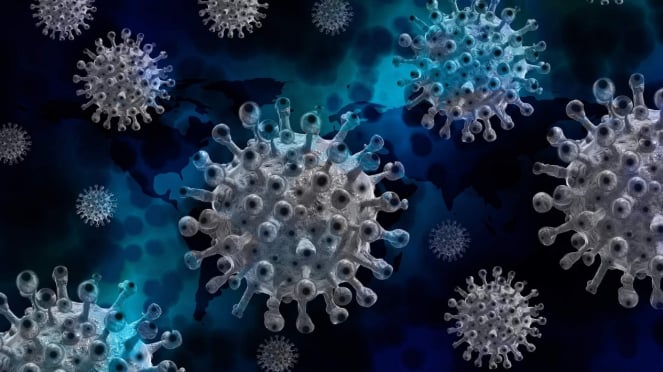
Ilustrasi COVID-19/virus corona.
- Pixabay/mattthewafflecat
Furthermore, this variant displays alarming mutations as seen in the deadly Delta variant. Though this trait is generally not seen in other Omicron sub-variants which makes it even more terrifying.

While CH.1.1 is not a Deltacron (a recombinant, or combination, of Delta and Omicron), it is a prime example of convergent evolution, a process where COVID-19 variants evolve independently but share the same mutations.
"I don't think we have a real understanding of what variants to pay attention to and which not to," said the director of the University of Minnesota's Center for Infectious Disease Research and Policy (CIDRAP), Dr. Michael Osterholm.
Here are the facts about Orthrus that are considered a deadly variant.
1. Emerged in Southeast Asia
CH.1.1 emerged in Southeast Asia this fall and is now responsible for more than a quarter of infections in parts of the United Kingdom and New Zealand, according to a preprint paper released last week by researchers at Ohio State University.
Its prevalence has risen sharply since November 2022 and now comprises about 10 percent of daily sequenced COVID-19 samples worldwide. The variant is among those monitored by WHO.